Press Platens for Compression Molding Composite Materials
Executive Summary
- Compression molding platens are heated steel plates that sit inside hydraulic presses. They control the heat and pressure needed to shape composite materials during manufacturing.
- Proper platen design improves curing consistency, part dimensional stability, and production efficiency in composite manufacturing environments.
- Venango Machine is a custom platen manufacturer that engineers heated platens to deliver uniform heat distribution, structural rigidity, and compatibility with existing press systems.
Request A Quote For Custom Composite Press Platens
What Are Compression Molding Platens for Composites?
Press platens for compression molding composites are heated steel plates used in presses to shape composite materials. They apply high pressure to squeeze a mixture of resin and fibers into a mold until it hardens into a finished part.
Heated platens are essential to composite molding for several reasons:
- Precision platens keep the material at the exact temperature it needs to cure properly.
- Spread consistent pressure evenly across the entire surface of the mold.
- Make sure the finished part has an even thickness, critical for end applications.
- Hold up against the heavy forces and consistent use required for production.
The Value of Precision Platens
Composite parts require precision-engineered platens to prevent defects such as incomplete curing, warping, or uneven fiber distribution.
Custom Compression Molding Platens from Venango Machine
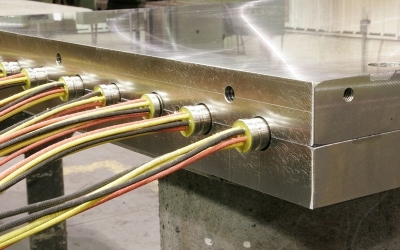
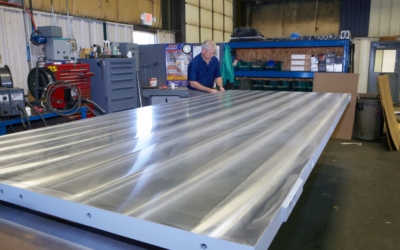
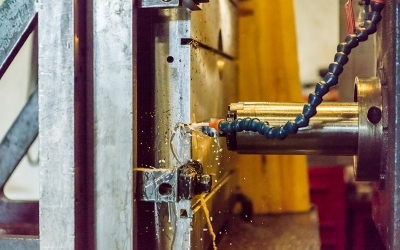
Venango Machine specializes in manufacturing custom press platens for compression molding composites. Our internal capabilities include precision machining, heat-control integration, and the production of large steel platens used in industrial environments.
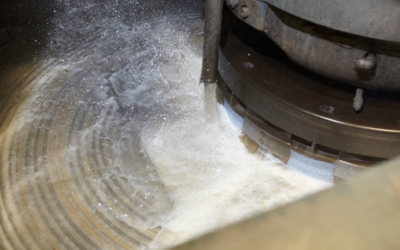
We utilize advanced machining equipment and decades of manufacturing expertise to manufacture platens that offer precision flatness, uniform heat transfer, compatibility with new and legacy press equipment, and long-term durability with consistent exposure to high temperatures and pressures.
Custom Platen Design Improves Component Consistency
Venango Machine designs and manufactures custom heated platens for composite molding presses. Each platen is precision-machined for flatness, uniform heat transfer, and drop-in compatibility with existing hydraulic systems.
How Heated Platens Enable Composite Compression Molding
Heated platens act as the main heat source in compression molding presses. They push heat into the mold so the composite materials can melt together, take shape, and harden into a solid part.
Compression molding typically requires:
- Thermoset composites cure at temperatures between 290°F and 400°F
- Hydraulic press systems to generate high clamping forces
- Pressure stays on the material until it fully cures and solidifies
Here’s a general five-step composite manufacturing process:
- Step 1: A worker prepares the composite material as a preform or charge.
- Step 2: The material goes into a heated mold cavity.
- Step 3: A hydraulic press closes the mold between two heated platens.
- Step 4: Heat and pressure cause the material to flow and fill every part of the mold.
- Step 5: The composite cures and becomes a finished structural component.
Why Platen Design Determines Part Quality
Composite materials have to cure under steady, controlled heat. Platens that distribute heat unevenly will produce inconsistent parts, so good platen design is what keeps the process reliable and repeatable.
Final Composite Products Manufactured with Press Platens
Compression molding platens help manufacture parts from many different reinforced materials. Some of the most common include:
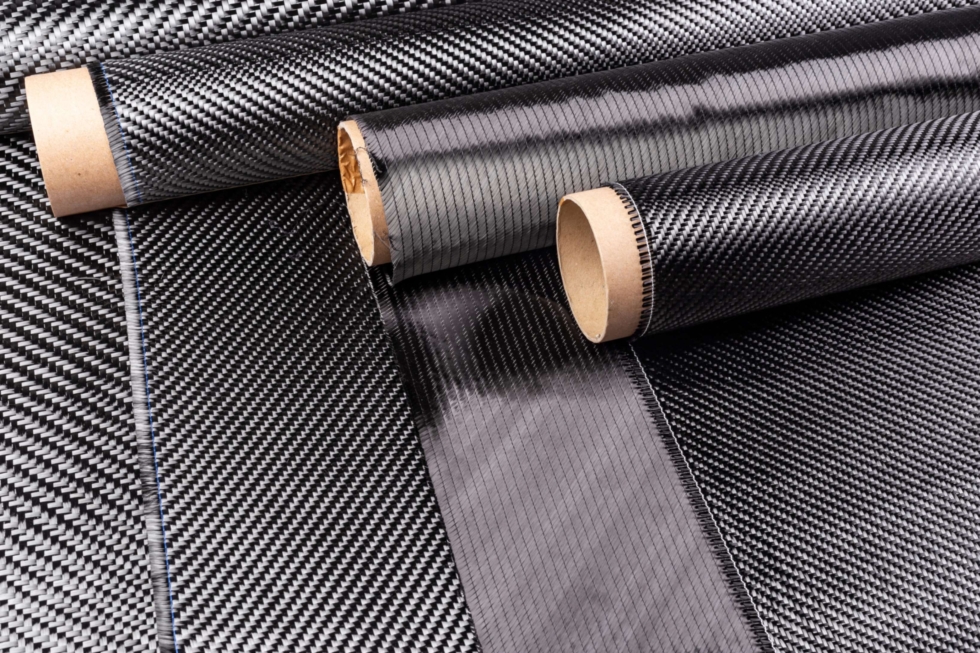
- Carbon Fiber: Carbon fiber parts are incredibly strong but very light. Manufacturers use them to build airplanes and high-performance cars.
- Fiberglass: Fiberglass is tough and will not rust. It is a popular choice for industrial machines, electrical boxes, and vehicle parts.
- Sheet Molding Compound (SMC): SMC mixes chopped glass fibers with resin to create large, strong parts that hold their shape perfectly.
- Bulk Molding Compound (BMC): BMC uses shorter glass fibers mixed into resin. Manufacturers often use it to make electrical housings and car parts.
Design Considerations for Composite Molding Platens
High-performance platens must meet strict engineering standards to produce reliable composite parts. Engineers consider four features when designing composite platens:
Even Heating: Composite materials need the exact same temperature across the entire mold to harden correctly. Engineers design platens with precise heating channels to eliminate hot or cold spots.
Extreme Strength: Compression molding presses apply thousands of tons of force. Platens must stay perfectly flat under this massive pressure to keep the finished parts accurate and even.
Heat Expansion Control: High temperatures naturally cause steel to expand. Good platen design accounts for this expansion, so the plates stay flat during the molding process.
Machine Compatibility: New platens must fit perfectly into existing presses. They need to match the original bolt patterns, mounting points, heating systems, and thickness requirements.
Why Comprehensive Platen Engineering Matters
A well-engineered platen balances thermal precision, structural integrity, and seamless machine integration. Getting these design factors right ensures you produce strong, consistent parts without wasting expensive materials or risking equipment downtime.
Platens for Carbon Fiber Compression Molding
Carbon fiber parts require more specialized platens than most other composite materials because sheet molding compounds and prepreg systems need precise heat control throughout the entire cure cycle. Even small variations in temperature or pressure will show up in the finished part.
Platens built for carbon fiber applications typically include:
- Multi-zone heating systems eliminate temperature variation across the mold surface and prevent weak spots in finished parts.
- Precision ground surfaces guarantee full contact between the platen and mold, so pressure stays uniform and parts come out dimensionally accurate.
- High-temperature alloys maintain structural integrity under the extreme heat and pressure that carbon fiber materials require to cure correctly.
- Tight flatness tolerances ensure every part in the production run meets the same dimensional specifications.
Why Carbon Fiber Platens Are Built Differently
Aerospace and automotive manufacturers rely on specialized platens to prevent defects in expensive carbon fiber components.
Industries Requiring Compression Platens for Composites
Compression molding is used in many industries that require lightweight yet durable structural components that can withstand considerable performance expectations.
Aerospace Manufacturing
Manufacturers produce interior panels, structural brackets, and aircraft components where weight and strength tolerances are critical.
Automotive Manufacturing
Automotive OEMs mold carbon fiber body panels, structural reinforcements, and weight-reducing parts for production vehicles.
Electrical & Industrial Equipment
Composite laminates provide electrical insulation, heat resistance, and rigidity for industrial equipment housings and assemblies.
Infrastructure and Industrial Products
Molded composite parts deliver consistent wall thickness and high load-bearing strength for heavy-duty industrial applications.
FAQs About Venango Composite Compression Molding Platens
What temperature do composite compression molding platens operate at?
Most thermoset composite molding operations occur between 290°F and 400°F, though the exact temperature depends on the resin system and curing requirements.
What materials are used to manufacture compression molding platens?
Compression molding platens are typically machined from high-strength steel plates capable of withstanding high temperatures, hydraulic press forces, and repeated production cycles.
Can replacement platens be manufactured for existing presses?
Yes, Venango Machine can reverse engineer existing hydraulic press systems and produce replacement platens that match bolt patterns, heating systems, and dimensional requirements.
What types of composites are commonly compression molded?
Common materials include SMC, BMC, carbon fiber composites, fiberglass composites, and thermoplastic reinforced polymers used in aerospace, automotive, and industrial applications.
Partner with Venango Machine for High-Quality Composite Press Platens
Press platens for compression molding directly determine whether composite parts meet dimensional and structural specifications. Platen quality affects cure consistency, production yield, and the long-term reliability of the manufacturing process.
At Venango Machine, we custom-engineer platens to the exact specifications of each press system and application. Every platen is built to perform under the heat and pressure demands of real production environments.
Click below for a quote and to learn more about our custom compression molding platens.
Request A Quote For Custom Composite Press Platens