
Top Applications for Composite Material Presses in Composite & Rubber Molding
Composite material presses are used to accurately apply controlled heat, pressure, and dwell time needed to form, consolidate, and cure advanced composite materials and other molded rubber components. Hydraulic platen presses are well-suited for these manufacturing processes as they provide a consistent level of force and integrate precisely heated platens across a variety of production sizes, temperatures, and molding requirements.
Common applications for Venango composite material presses and hydraulic platens include carbon fiber panels, aerospace laminates, automotive structural components, industrial tooling, rubber gaskets, seals, bushings, and vibration-dampening components.
Venango Machine manufactures precision heated platens for composite material presses widely used throughout aerospace, automotive, medical, rubber molding, industrial OEM, and other demanding production environments. This article looks at where our hydraulic platens are used, why temperature uniformity is critical, and which composite material platen characteristics deliver consistent molding results.
TL;DR: Composite Material Press Applications
- Composite material presses provide exceptional heat, pressure, and dwell time control for composite curing, consolidation, forming, and rubber compression molding.
- Common composite components made using Venango hydraulic material presses include carbon fiber panels, aerospace laminates, automotive parts, structural components, and tooling or fixtures.
- Rubber compression molding presses are commonly used to manufacture gaskets, seals, O-rings, bushings, mounts, and vibration-dampening components.
- Temperature uniformity, platen surface flatness, heating methods, pressure control, and cooldown time all influence composite and rubber part quality and consistency.
What Is a Hydraulic Platen Press?
A hydraulic platen press is a type of industrial press that uses hydraulic force to compress and shape materials between two evenly and precisely calibrated heated platens. These presses can come in a variety of shapes, sizes, configurations, and capacities to match their end uses. Unlike mechanical presses, hydraulic systems offer more accurate control over the exacting pressure, temperature, and hold time, making them ideal for molding advanced composites and a wide variety of synthetic and natural rubber compounds.
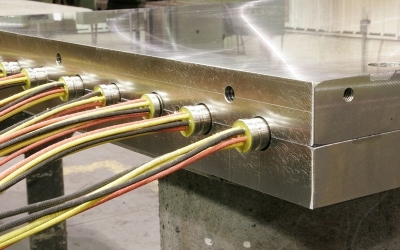
Heated platens, whether electric, steam, or thermal fluid, are commonly integrated into the press structure to deliver uniform heat across the mold surface, which is crucial for curing and shaping materials that require thermal processing like carbon fibers, rubbers, thermoplastics, and to cure the adhesives used in composite lumber or plywood manufacturing.
Composite Material Press Applications
Hydraulic platen presses are widely used as composite molding presses across aerospace, defense, and transportation sectors, and Venango Machine has manufactured custom platens for many of these high-performance applications, including high-temperature platens for carbon fiber. The precision and programmable control features make hydraulic presses with precision platens ideal for handling specialty composite materials like carbon fiber, fiberglass, and thermosets, which are critical to the sector as they provide exceptional durability with superior lightweight properties.
Aerospace Applications for Hydraulic Platen Presses
In the aerospace industry, hydraulic platen presses are commonly used for a variety of applications, including the following:
- Forming the durable carbon fiber-reinforced polymer (CFRP) panels used throughout the interior and exterior of planes, satellites, and other aerospace projects.
- Laminating multi-layer composite parts that require precision temperature and pressure control to provide the optimal conditions for composites to cure and harden.
- Curing high-strength structural components with tight tolerances so they can adhere to AS9100 standards or other quality control standards common throughout the industry.
These parts must withstand extreme mechanical loads and high temperatures, making the pressure accuracy and thermal uniformity of a hydraulic platen press essential to their success.
Automotive Applications for Hydraulic Platen Presses
Automotive manufacturers consistently rely on hydraulic presses for a variety of parts and components made from composites and even rubber. Many of the most common components are detailed below:
- Producing interior composite panels from high-performance composites that require considerable heat to create optimal conditions to cure and harden the material into the desired shape, while improving toughness and reducing weight.
- Molding under-hood components that need to withstand challenging conditions, including the presence of fuels, road salts, changing temperatures, and pressures, while not dramatically increasing the total weight of the vehicle.
- Creating lightweight structural reinforcements that act as both cost and weight-saving replacements for more traditional metal parts typically used.
With the growing demand for electric vehicles, composite molding presses help reduce vehicle weight without sacrificing strength, contributing to better energy efficiency and fuel economy.
Creating Industrial Tooling and Fixtures with Hydraulic Presses
In industrial settings, composite molding is often used to create durable tooling, molds, and structural brackets to provide cost savings and improve efficiency over metal tooling and molds. A hydraulic platen press ensures the following benefits:
- Consistent heat application during curing with precise temperature control settings across the entire face of the platen, with some platens from Venango Machine going so far as to offer Multi-Zone control that provides the option for separate settings depending on the part design.
- High-pressure control for uniform consolidation and curing of laminates with precision timing and PSI levels, ensuring production efficiency by not over- or under-compressing the materials.
- Reproducible and consistent quality results throughout the entire production cycle and beyond with tight tolerance molds.
Rubber Compression Molding Applications
Hydraulic platen presses are also indispensable in rubber compression molding, where unvulcanized rubber is shaped under heat and pressure into finished parts and produces the finished “vulcanized” state, or more specifically, the curing of present elastomers.
While other methods of rubber molding exist (transfer and injection), compression molding continues to be the most widely used and versatile molding application for low to medium-volume projects of somewhat larger parts. The platens for heated compression molding presses must maintain uniform temperatures and surface tolerance to produce consistent results on a few of the part types mentioned below.
Gaskets, Seals, and O-Rings
Used by nearly any industry, from automotive to medical, the production of rubber gaskets, seals, and O-rings relies on these presses to produce high-quality products with specific resistances and durability to withstand use in the following applications:
- Fluid systems such as hydraulic, oil, fuel, cooling, water, and countless other systems that pressurize and transfer liquids from one component to another in a closed system.
- Engines require countless gaskets, seals, and O-rings to perform reliably as they contain fluids and create tight seals necessary to transfer combustion into power.
- Industrial equipment depends heavily on these rubber components, and they can come in a variety of shapes and sizes depending on the equipment itself. Many specialized synthetic rubbers are used in this industry for their different resistance levels to fuels and solvents, each requiring a different temperature setting or pressure during molding.
Vibration Dampening Components
For applications requiring shock absorption and noise isolation, rubber molded parts are an excellent option as they can withstand repeated use and exposure to challenging conditions. Many of these parts are used throughout the automotive, aerospace, marine, and industrial manufacturing environments, with a few parts being:
- Automotive engine mounts that keep critical components steady and balanced during operation over uneven surfaces or at high speeds.
- Heavy equipment bushings protect parts and components from excessive vibrations that could dislodge or loosen certain components and result in catastrophic failures.
- Aerospace vibration isolators for both commercial and military applications that protect against shaking or tremors common at high speeds, including turbulent air.
Rubber components must meet exacting specifications. The programmable dwell times and temperature consistency of a hydraulic platen press make it possible to hit those specs with minimal scrap.
What Features Matter in Composite Material Presses?
The performance of a composite material press depends on more than hydraulic force alone. The condition, design, and thermal properties of the platen have a direct influence on production consistency, quality, tolerance control, and repeatability.
Important platen characteristics include:
- Temperature Uniformity: Molding composite or rubber parts does not happen without consistent surface temperatures that help deliver predictable curing and vulcanization conditions throughout the mold.
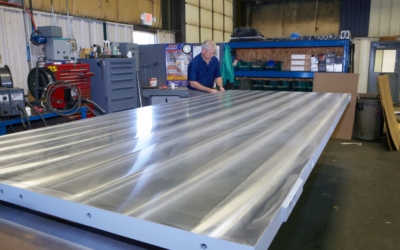
- Platen Flatness/Parallelism: Precision-machined and ground platen surfaces help distribute pressure consistently across the entire tooling face and molded material.
- Heating Method: Platens use electric, steam, and thermal-fluid heating systems to provide different operating temperatures and cooldown times depending on the final molding material and end application.
- Pressure Control: Hydraulic systems allow manufacturers to maintain defined pressure throughout the molding and curing cycle.
- Multi-Zone Temperature Control: Our Multi-Zone platens allow for independently controlled heating zones that help accommodate large platens, complex tooling shapes, or advanced processes that require different thermal conditions.
- Platen Size & Press Capacity: Our custom platen manufacturing capabilities allow us to match platen dimensions to the mold footprint, material systems, molding pressure, and other production requirements like volume or part design.
Selecting the correct platen configuration will allow OEMs to maintain stable molding conditions and improve process repeatability across both composite and rubber applications. Venango Machine composite material presses and hydraulic platens are a trusted solution for manufacturers looking to refine, expand, or improve their molding processes for more advanced or challenging applications.
FAQs About Composite Material Presses
What are composite material presses used for?
Composite material presses are used to form, consolidate, laminate, and cure engineered composite materials using controlled levels of both heat and pressure.
What materials can be processed using a hydraulic platen press?
Hydraulic platen presses can process a wide variety of materials, but some of the most common processed by OEMs are carbon fiber composites, fiberglass, thermoset composites, thermoplastic resins, natural rubber, synthetic rubbers, laminates, and anything else that requires a combination of heat and pressure to form correctly.
Does Venango Machine manufacture custom heated platens for composite molding?
Yes, our heated platens can be fabricated to custom dimensions or specifications to best fit composite molding applications. Our premium platens provide superior temperature and pressure control to help evenly cure composite resins to avoid incomplete curing, dimensional inconsistencies, and material waste.
What heating methods does Venango offer in press platens?
Venango Machine can manufacture industrial press platens for composite or rubber molding applications using electric, steam, or circulating thermal fluid heat. The appropriate heating method depends on the required temperatures, platen dimensions, thermal uniformity requirements, and cycle times.
Quotes for Precision Heated Platens
Whether you’re molding aerospace-grade composites or high-performance rubber components, a hydraulic platen press, specifically those outfitted with custom platens from Venango Machine, offers the consistency, control, and force required for mission-critical results. Their role in composite molding presses and rubber compression molding continues to grow as manufacturers push the limits of strength-to-weight ratios, thermal resistance, and product longevity.
If you’re exploring custom press solutions or upgrading your production line, be sure to consider a system that includes precision steam, thermal fluid, or electrically heated platens, integrated controls, and scalable tonnage to meet your evolving molding needs. Contact Venango Machine to get started today!